


Pollen forecast for Austria for 11 May 2026
A drop in temperature and rain are bringing some relief!
The weather forecast for the coming days predicts a significant drop in maximum daily temperatures, as well as rain across the country. Only on Wednesday, and in the east of the country also on Thursday, is the sun likely to shine for extended periods, allowing for more intense pollen dispersal. Otherwise, people who are sensitive to grass pollen in particular can look forward to a brief period of relief.
But beware: as soon as it remains dry for a prolonged period, intense grass pollen levels are to be expected. From an allergological perspective, grass flowering now accounts for the most significant proportion of the pollen spectrum in most parts of the country. In particular, bluegrass, ryegrass, cocksfoot and foxtail are currently responsible for the measurable pollen concentrations.
In meadow areas, additional exposure from sorrel and plantain is also possible.
Beech and oak have also already passed the peak of their flowering season in most parts of the country and are now rarely detected in concentrations high enough to cause severe allergic symptoms.
People who are sensitive to pollen from olive trees should continue to expect symptoms in the coming days due to the flowering of the manna ash.
Note: Yellow streaks are currently visible in rain puddles. This phenomenon is known as sulphur rain and is caused by pollen from conifers such as spruce, pine and fir. From an allergological perspective, this pollen is not relevant. However, during sunny spells, high concentrations may develop in the ambient air, which can cause mechanical irritation of the conjunctiva and the respiratory tract.
Many rapeseed fields are already finishing flowering. To avoid potential symptoms, people with pollen allergies should nevertheless avoid the vicinity of these fields.
Linden trees, which are often planted in gardens, are also about to flower. Rainfall will delay flowering slightly. As the flowers of this plant are adapted to insect pollination, they are generally rarely found in the air. However, the scent of the flowers can irritate the airways of sensitive individuals.
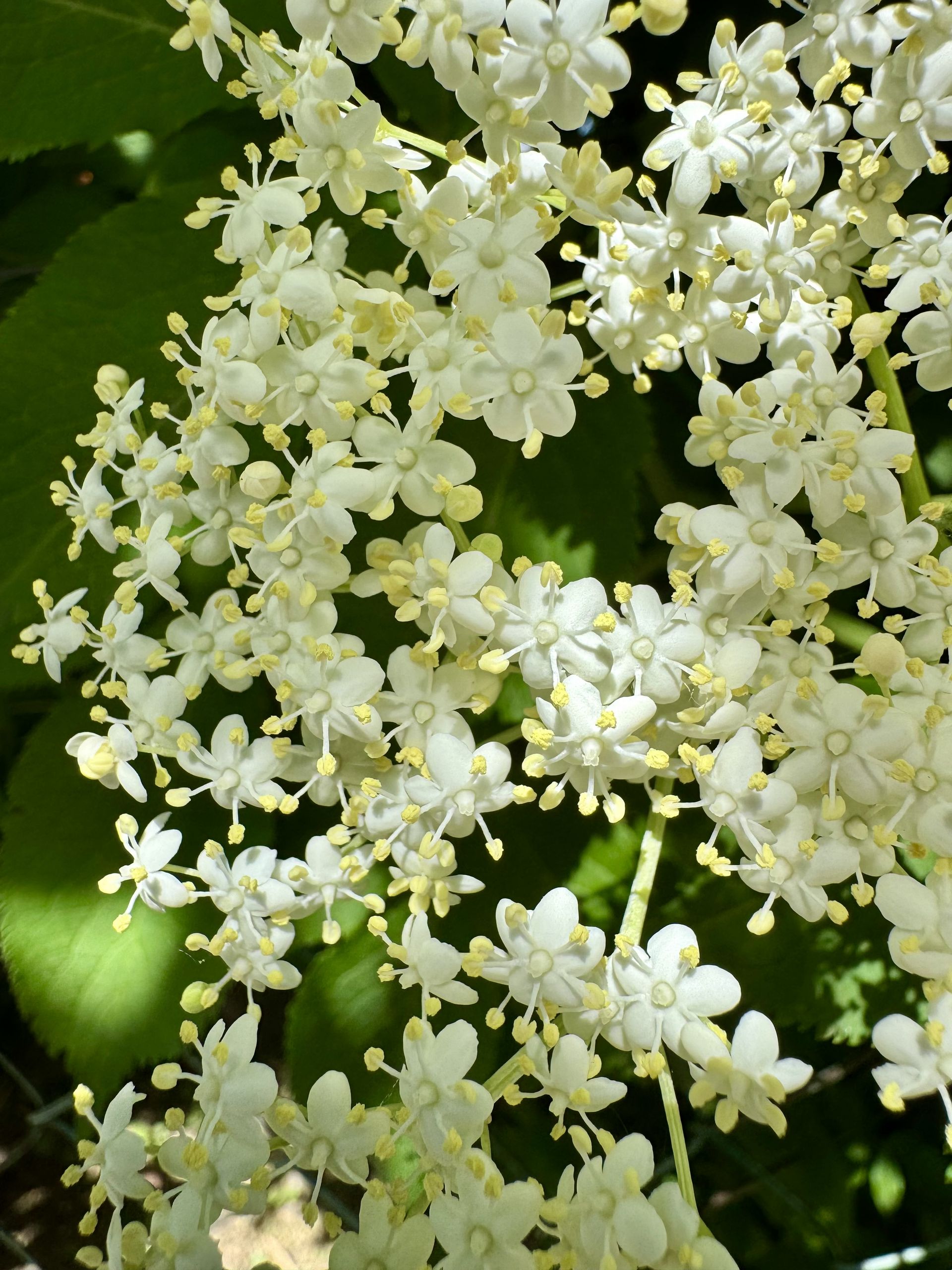
In addition to the pollen types mentioned, umbellifers, elder, mulberry, black locust, horse chestnut, sour grasses, papilionaceous plants, walnut and cypresses are currently also present in the pollen spectrum. However, they pose only a very low allergenic risk.
Responsible for the content
AZ Pollenresearch GmbH
im Auftrag des Vereins Österreichischer Polleninformationsdienst in Kooperation mit der GeoSphere Austria.
Dr. med. Markus Berger, Dr. rer. nat. Johannes M. Bouchal und Lukas Dirr, MSc.
Wetterdaten und Prognosen basierend auf synoptischen Daten:
GeoSphere Austria, Bundesanstalt für Geologie, Geophysik, Klimatologie und Meteorologie (ehemals ZAMG)
zum Team
