


Plantcompass
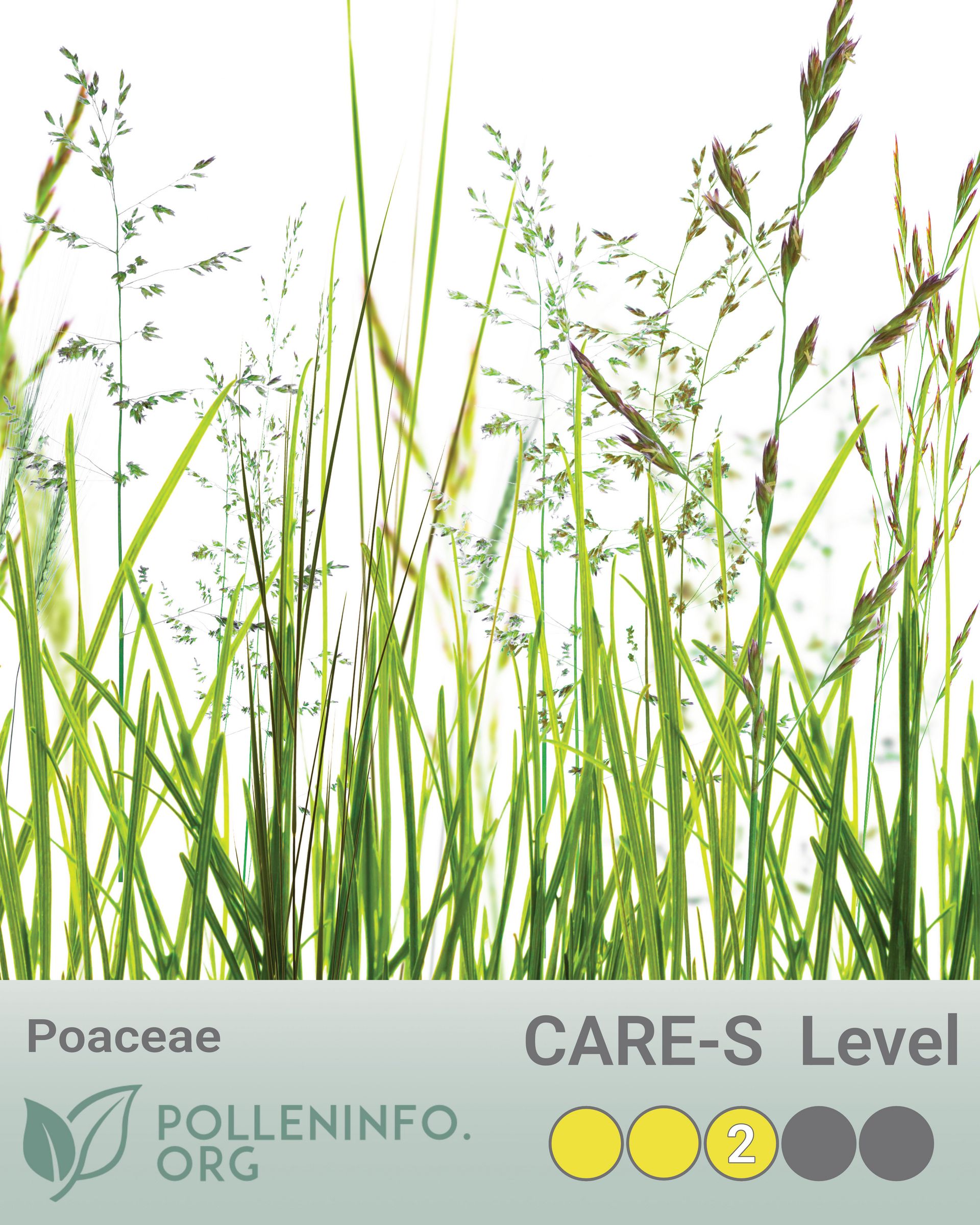
Grasses (Poaceae)
General Information
Family: Grasses (Poaceae)
Flowering period in Central Europe: Full Spring to Full Autumn
Months: 5–9
Allergy potential
CARE-S* Level 2. Main allergen Lol p1–11.
Botanical Information
Distribution
Over 12,000 grass species worldwide, various habitats and habits.
Morphology
Habit — Herbaceous, some species woody, annual, perennial, or biennial (overwintering rosettes or tussocks), inflorescences reduced, inflorescences organized in spikes, racemes, and panicles.
Common species in Europe
Meadow foxtail (Alopecurus pratensis).
Allergy potential — CARE-S* Level 2. Flowering period in Central Europe — May (beginning of grass pollen season).
Sweet vernal grass (Anthoxanthum odoratum).
Allergy potential — CARE-S* Level 2. Flowering period in Central Europe — April to June.
Tall oatgrass (Arrhenatherum elatius).
Flowering period in Central Europe — June to August.
Kentucky bluegrass (Poa pratensis).
Allergy potential — CARE-S* Level 2. Flowering period in Central Europe — May to July.
Soft brome (Bromus hordaceus).
Allergy potential — CARE-S* Level 2. Flowering period in Central Europe — May to July.
Wild oat (Avena fatua).
Allergy potential — CARE-S* Level 2. Flowering period in Central Europe — June to August.
Perennial ryegrass (Lolium perenne).
Allergy potential — CARE-S* Level 2. Flowering period in Central Europe — May to September.
Cocksfoot (Dactylis glomerata).
Allergy potential — CARE-S* Level 2. Flowering period in Central Europe — May to July.
Tall fescue (Festuca arundinaceae).
Flowering period in Central Europe — June to August.
Yorkshire fog (Holcus lanatus).
Allergy potential — CARE-S* Level 2. Flowering period in Central Europe — May to August.
Timothy grass (Phleum pratense).
Allergy potential — CARE-S* Level 2. Flowering period in Central Europe — June to September.
Bermuda grass (Cynodon dactylon).
Allergy potential — CARE-S* Level 2. Flowering period in Central Europe — May to September.
* CARE-S is an evidence-based system for categorising the allergenic potential of plants. Additional information about CARE-S is available here.