


Plantcompass
Maple (Acer spp.)
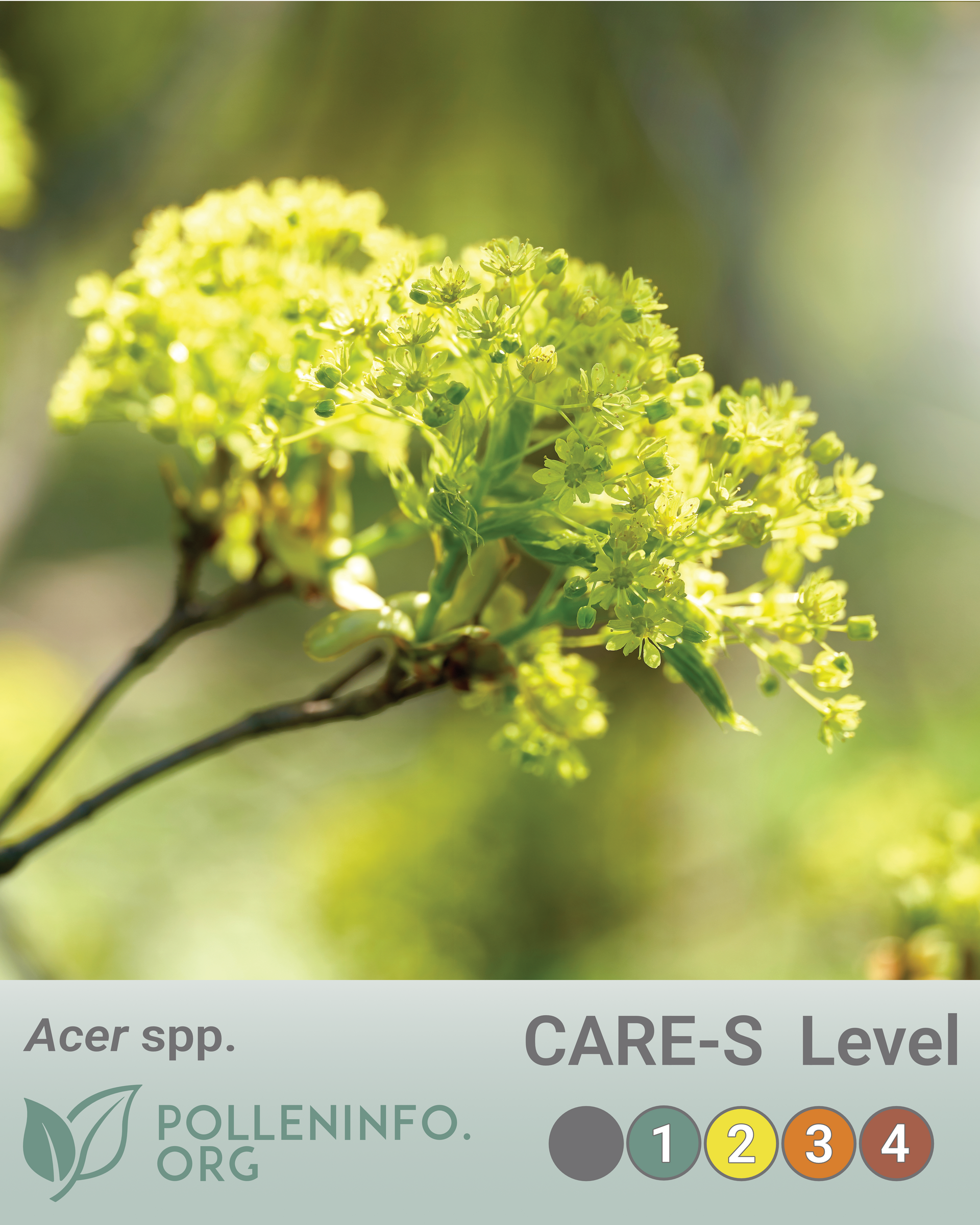
General Information
Family: Soapberry family (Sapindaceae)
Flowering period in Central Europe: Early to full spring
Months: 3–5
Allergy potential
CARE-S* Level 1–4.
Cross-reactions
Not only maple pollen can cause allergenic reactions, it is also significant as a food allergen (maple syrup, honey).
Botanische Informationen
Distribution
Widely distributed across the Northern Hemisphere, some species also native to tropical mountains, southernmost distribution in Honduras and Indonesia. Habitats — Plains to mountainous regions.
Morphology
Habit — Tree or shrub. Foliage — Summer-green (rarely evergreen), often leaves palmately lobed, leaf margin smooth or serrated. Reproduction — Large inflorescences, individual flowers hermaphroditic and radially symmetrical, winged nut fruits (samara with aerodynamic shape, autorotate when released).
Commonly occurring species in Europe
Boxelder maple or ash-leaved maple (Acer negundo).
Allergy potential — CARE-S* Level 4. Habit — Tree. Foliage — Summer-green, toothed compound leaves. Reproduction — Flowers before leaf emergence, wind-pollinated. Habitats — Riparian and swamp forests, native to North America, naturalized and widespread in Europe. Flowering period in Central Europe — March to April.
Norway maple (Acer platanoides).
Allergy potential — CARE-S* Level 1. Habit — Tree. Foliage — Summer-green, leaves palmately lobed, acute leaf tips. Habitats — Summer-green forests. Cultivated as street and park trees. Flowering period in Central Europe — April to May.
* CARE-S is an evidence-based system for categorising the allergenic potential of plants. Additional information about CARE-S is available here.