

Eurovision Song Contest 2026
Pollen information for the Eurovision Song Contest from 11 to 17 May
With the 2026 Eurovision Song Contest, Vienna is set to host its next major event. Although the event itself will take place in the Wiener Stadthalle and thus predominantly indoors, where low pollen levels are generally expected, significant pollen levels may nevertheless occur at accompanying outdoor events, such as the public viewing on Vienna’s Rathausplatz. Below you will find general pollen information for Vienna, as well as details on the plant species in the area around Rathausplatz that may currently be releasing pollen.
Pollen information for Vienna
The ESC week begins with changeable weather, including rain and thunderstorms. Sunny spells are not expected until Wednesday and Thursday. Heavy rain can temporarily wash pollen out of the air, providing short-term relief for allergy sufferers.
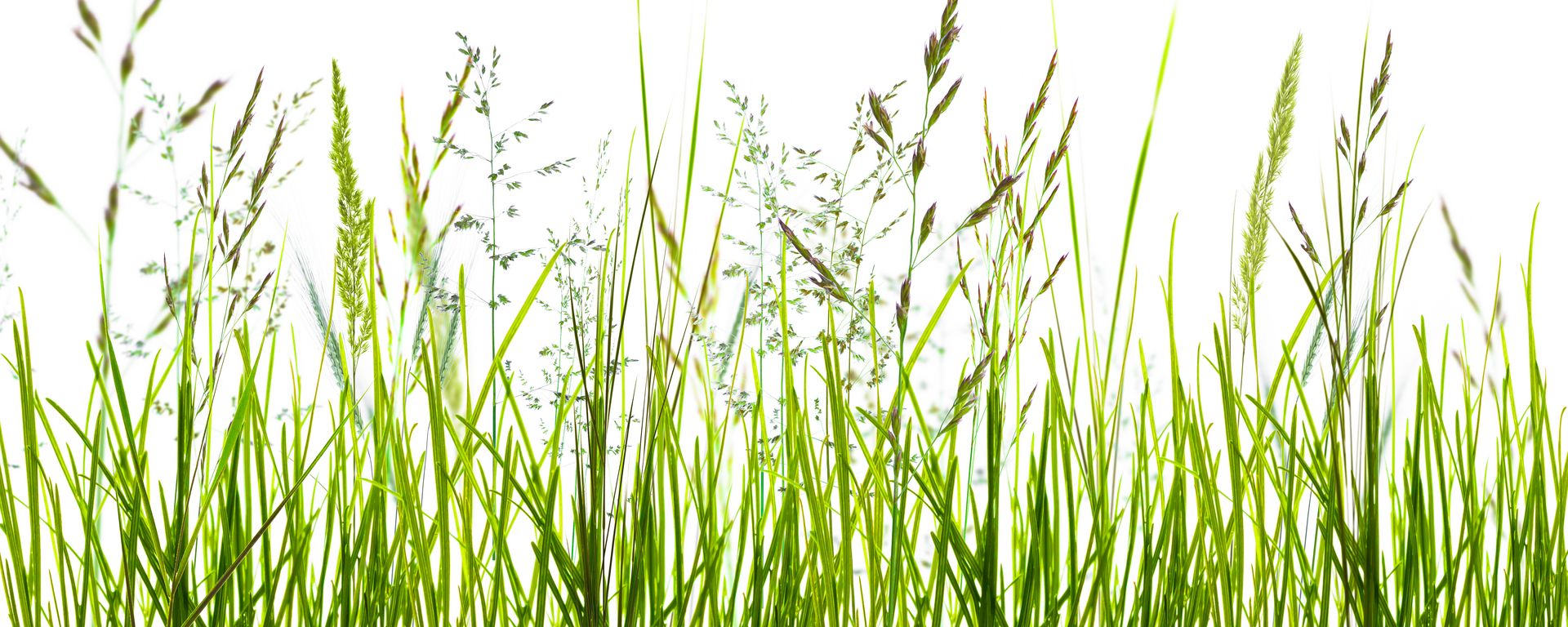
Currently, the greatest allergenic burden comes from grass pollen. The grass pollenseason has just begun, with bluegrass, ryegrass, orchardgrass and foxtailgrasses currently in bloom. Moderate to high levels of pollen are possible in dry and sunny weather. In addition, symptoms may be exacerbated by plantain, which is also currently in bloom.
Yellowish deposits or streaks in rain puddles may also be visible at present. This phenomenon is known as 'sulphur rain' and is caused by conifer pollen. While it is considered harmless from an allergological perspective, at high concentrations in the air it can cause mechanical irritation to the eyes and respiratory tract.
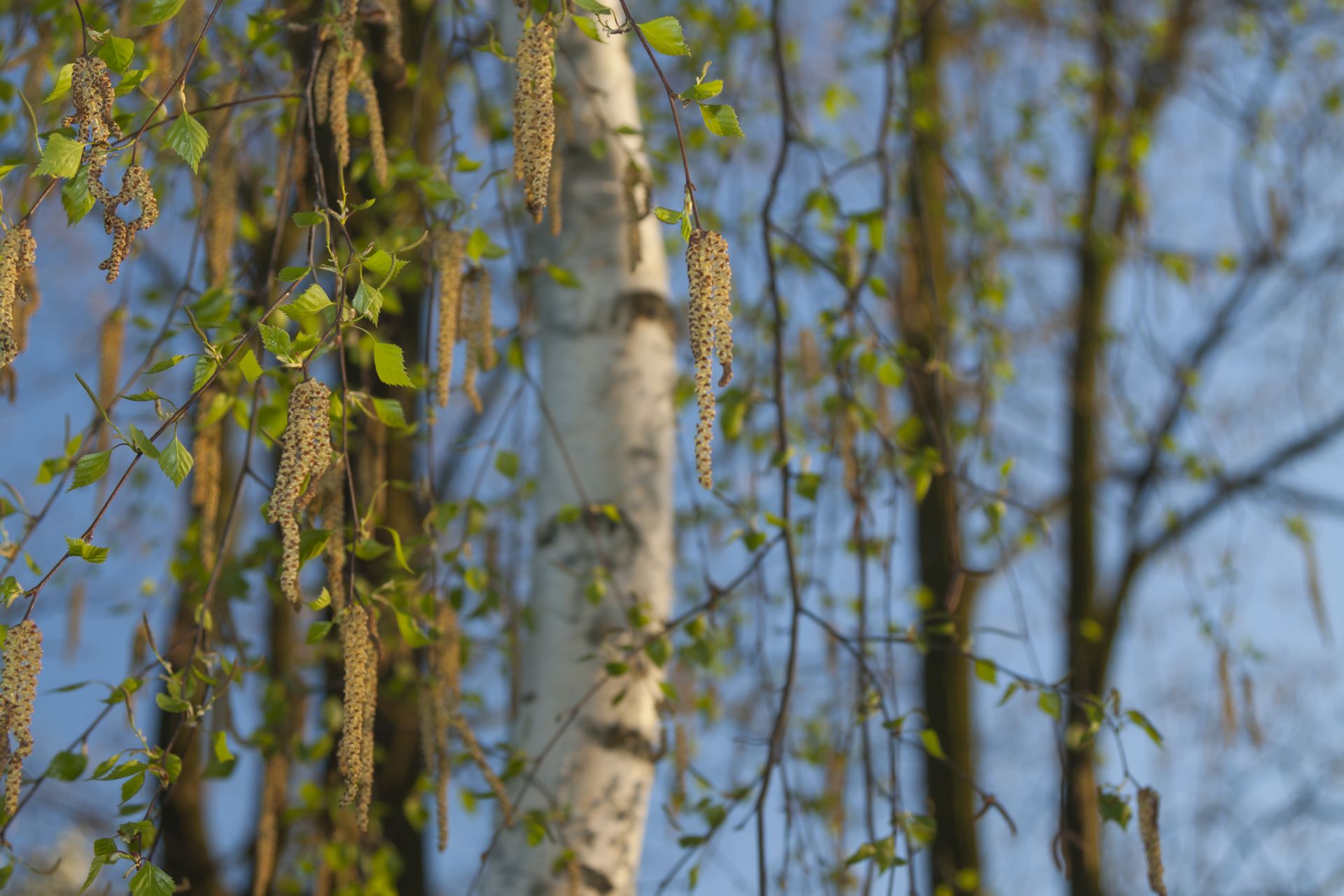
The birch pollenseason is now almost over. Exposure to beech and oakpollen is also decreasing significantly. However, cross-reactions in people with birch pollen allergies are still possible.
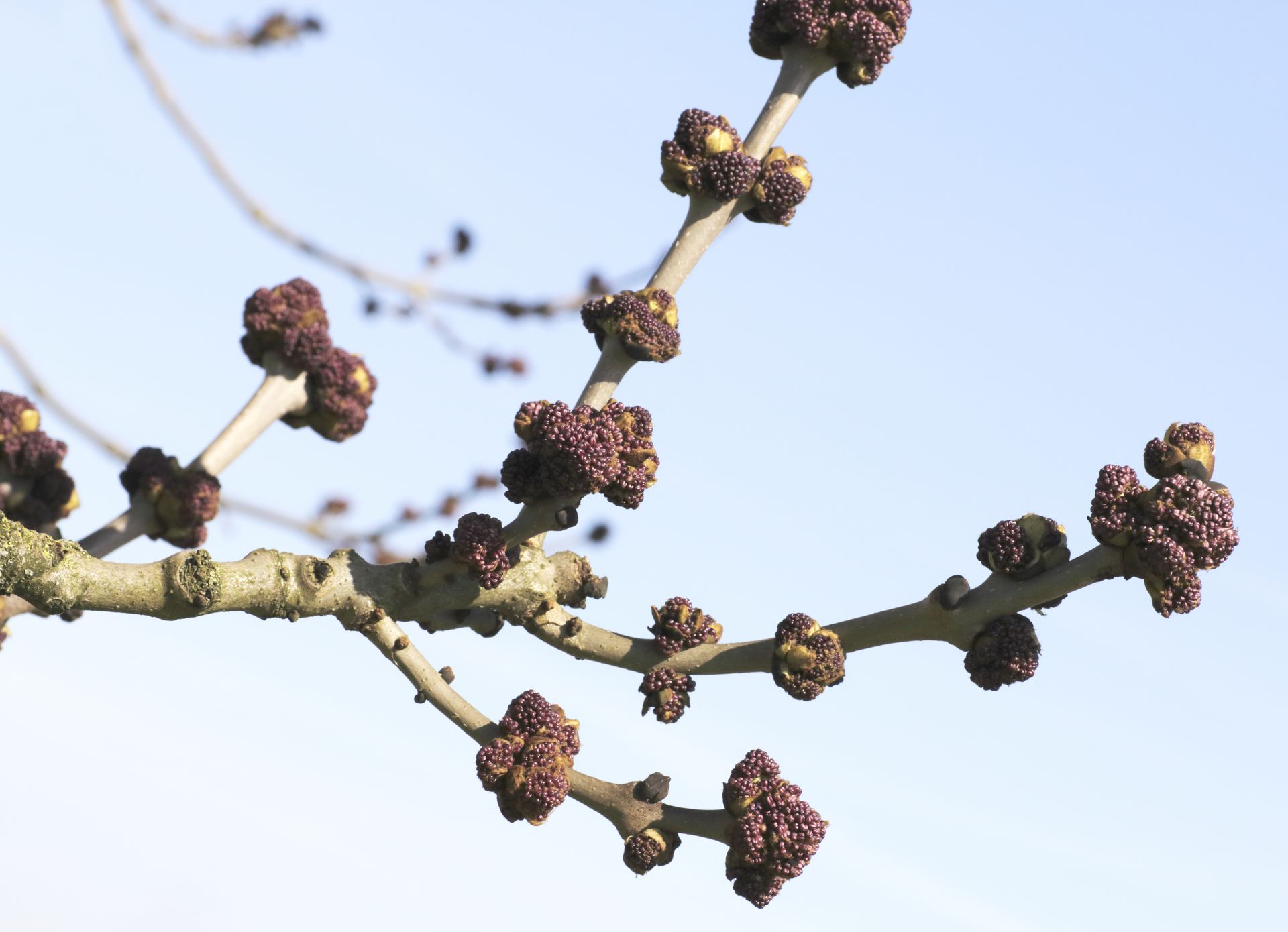
In many Viennese parks, including those around the Stadthalle, manna ash trees may still release pollen occasionally. This can trigger symptoms, particularly in people who are sensitised to oleaceae pollen. Horse chestnuttrees are also frequently found in these areas, although their flowering season has largely finished.
In addition, numerous parks have lime trees that are on the verge of flowering or will begin to flower over the next week. Like the manna ash and the horse chestnut, these are insect-pollinated plant species, which is why comparatively little pollen is released into the air. However, symptoms may still occur in the immediate vicinity of the trees, either due to the pollen itself or, in the case of lime trees, due to the intense scent of the blossom.
Other currently detectable pollen types, such as elderberry and mulberry, have only a low allergenic potential.
Local pollen levels at Vienna’s Rathausplatz
This year, the Eurovision Village in Vienna's Rathausplatz is offering visitors the chance to watch the Eurovision Song Contest at an open-air public viewing event. As a result, this location may experience higher levels of pollen than the event at the Stadthalle. Generally, levels similar to those in the rest of the city can be expected. In dry weather, moderate to high levels of grass pollen are also possible at the Rathausplatz.
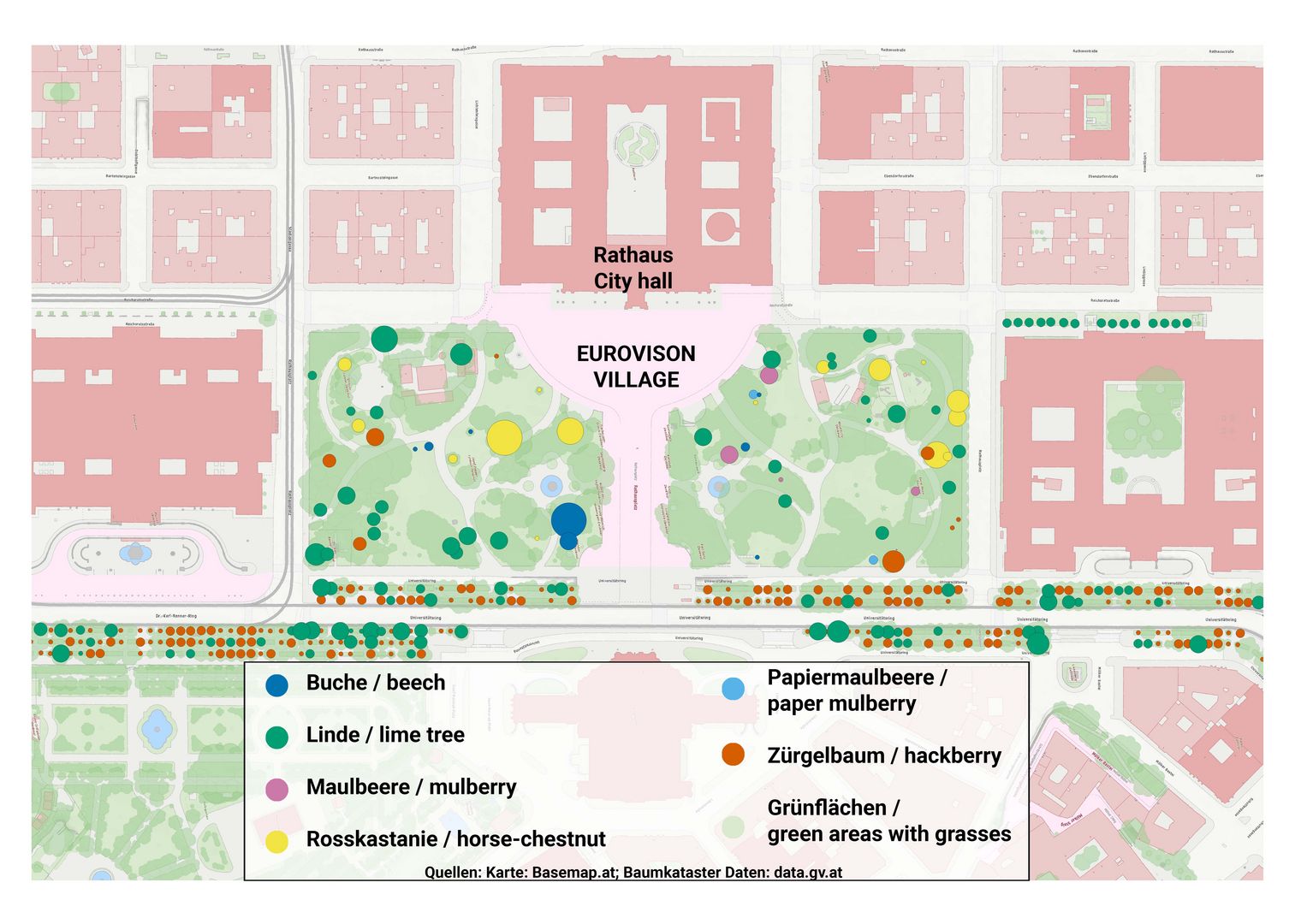
As can be seen in the image below, which shows the marked plants, there are several beech and horsechestnuttrees in the immediate vicinity, alongside lawns. While these plants have passed their peak flowering period, they may still cause low levels of pollen exposure locally.
The same applies to papermulberry and mulberry trees. Contact with their pollen may cause cross-reactions in people who are sensitised to elm or plants of the nettle family.
Most of the trees currently releasing pollen on Rathausplatz are lime and hackberrytrees. While lime trees are predominantly pollinated by insects, and their pollen usually occurs in significant quantities only in the immediate vicinity of the trees, hackberry pollen can be carried further by the wind, causing widespread exposure. Hackberry pollen is considered to be a moderate allergen. However, data on sensitisation rates in Austria are not currently available. Due to botanical relationships, cross-reactions with elm and plants belonging to the nettlefamily cannot be ruled out.
To minimise symptoms, we recommend that people with pollen allergies carry suitable emergency medication, regularly check the pollen forecast and hourly allergy risk, and wear sunglasses and a cap during the day.
The team at the Austrian Pollen Information Service wishes you an exciting and as far as possible, symptom-free ESC week and hopes you enjoy the show!