


Pollen forecast for Lower Austria for 10 September 2026
Thursday and Friday will bring some relief from the rain,
whilst Saturday and Sunday will be sunny and pollen counts will rise again!
Wednesday’s heavy rain has washed the pollen out of the air, providing some short-term relief for those with pollen allergies. The weather in Lower Austria will remain changeable on Thursday and Friday. Under these conditions, pollen levels will generally remain low, but may reach moderate levels in areas where ragweed and mugwort inflorescences are drying out. On Saturday and Sunday, the weather will be pleasant again with sunshine and temperatures between 20 °C and 25 °C. Under these weather conditions, pollen counts may pick up again and fluctuate between moderate and high levels. As the wind is blowing from the west, there will be no long-distance transport of ragweed pollen from neighbouring countries to the east into Lower Austria.
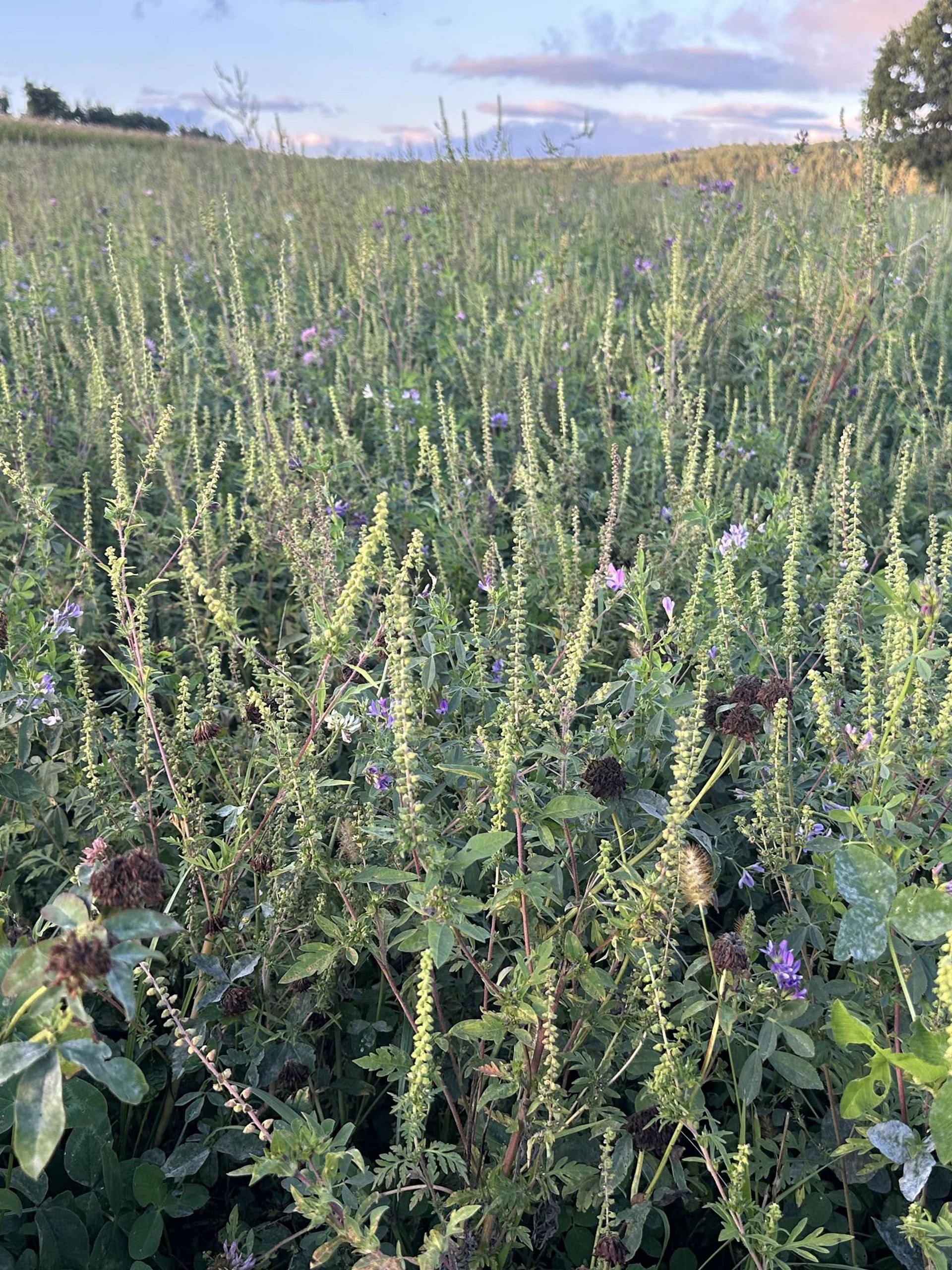
Ragweed flowering is progressing. Dense stands of this neophyte can be found on railway embankments, at rubble sites, along roadsides and in soya, pumpkin and sunflower fields. Even just a few pollen grains per cubic metre of air can trigger symptoms in sensitised individuals. Ragweed releases its pollen mainly in the morning.
If you spot ragweed populations whilst out and about, you can report the plant via the Ragweed Finder app or at ragweedfinder.at, thereby informing the relevant authorities in the federal states about the presence of this invasive plant.
Late-flowering mugwort species, such as annual mugwort and Katschatka mugwort, have begun to flower and may cause localised problems. Canadian goldenrod is also in flower. For people with allergies who are sensitised to mugwort or ragweed, Canadian goldenrod can trigger cross-reactions. Dense stands of this aster should be avoided by sensitised individuals.
Most grasses have already finished flowering in Lower Austria. Reed is flowering along still and flowing waters. People with allergies who are sensitised to grasses should bear this in mind when out walking. Plantain, goosefoot and nettle pollen also remain present in low concentrations in the ambient air.
Similarly, concentrations of fungal spores remain at a moderate to high level typical for late summer.
In addition to the pollen types already mentioned, pollen from hemp, carnation and cypress plants is currently also present in the pollen spectrum. However, these pose only a very low allergenic risk.
Responsible for the content
AZ Pollenresearch GmbH im Auftrag der Niederösterreichischen Landesregierung, Gruppe Gesundheit und Soziales, Abteilung Umwelthygiene.
Dr. rer. nat. Johannes M. Bouchal, Lukas Dirr, MSc und Mag. Sabine Kottik.
Wetterdaten und Prognosen basierend auf synoptischen Daten:
GeoSphere Austria, Bundesanstalt für Geologie, Geophysik, Klimatologie und Meteorologie (ehemals ZAMG).
zum Team
