


Pollen information for Lower Austria from 23 April 2026
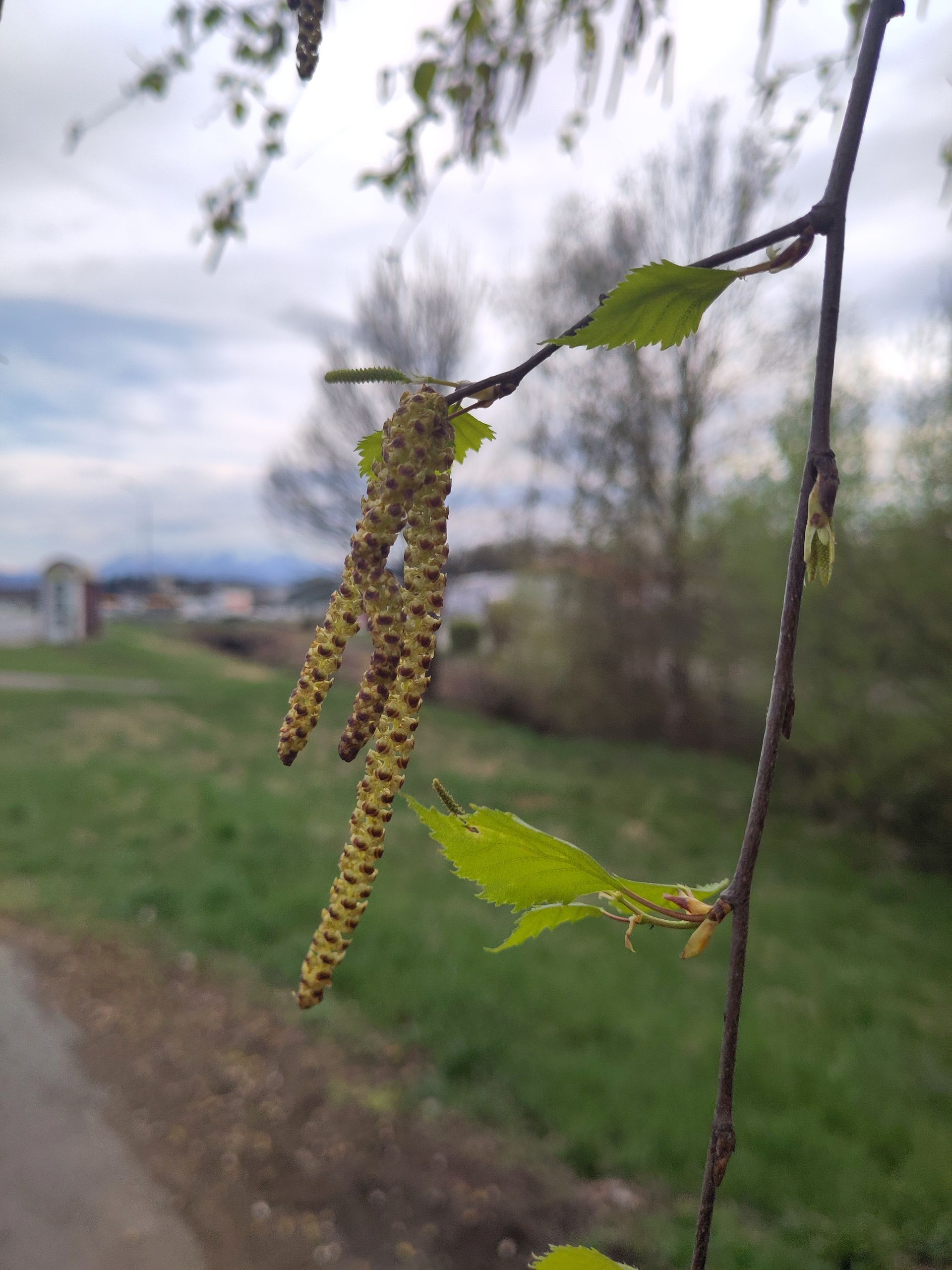
The birch blossom is coming to an end in the lowlands, but it is still causing a high pollen load!
From the Enns to the March, it will remain dry, mild and mostly sunny until the beginning of next week. These stable weather conditions will ensure that the pollen load remains at a high level throughout Lower Austria
The birch is still the most important allergen in the air. In the Danube region, the Weinviertel and the Vienna Basin, many birch trees have already shed most of their pollen and are beginning to shed their catkins. However, birch trees can still release large quantities of pollen in the higher regions of the industrial, cider and forest districts. High to very high concentrations are still being measured there. In addition, pollen-rich air masses can be transported from these areas to the lowlands in the afternoon hours. The flowering of the hornbeam has already finished flowering in large parts of Lower Austria, so only small amounts are still being recorded.
Oaks and beeches are at the beginning of their flowering period in Lower Austria. Due to their relationship to the birch family, they can also trigger allergic cross-reactions in sensitive people.
The manna asha common street and park tree, has also started to flower. Although it is relevant for people with an ash pollen allergy, it produces significantly less pollen than the common ash, as it is mainly pollinated by insects. Nevertheless, the immediate vicinity of these trees should be avoided.
The lilac is also in bloom. As a relative of the ash tree, it can cause cross-reactions in people who are sensitive to olive trees. As it is also mainly pollinated by insects, the pollen load is usually low and limited to the immediate vicinity. Sensitive people should therefore avoid placing flowering branches indoors.
The plane tree is currently in full bloom and can lead to noticeable exposure, especially along avenues. At the same time, the horse chestnuts are also beginning to blossom. Due to their relationship, they are particularly important for people who react to maple pollen.
Rapeseed is flowering in the fields of Lower Austria. Sensitised people should avoid the area around these yellow-flowering fields, as the exposure can be intense.
In the lower-lying regions such as the Danube region, the Weinviertel and the Vienna Basin, the number of early-flowering grasses slowly but steadily increasing. The first flowering panicle, tufted and foxtail grasses have already been observed, which means that low to moderate levels of pollution can be expected locally. In the higher regions of the industrial, cider and forest districts, however, it will take some time before the grasses start to flower.
In addition to the pollen types already mentioned, there is currently also pollen from maple, larch, rushes and cypress plants in the air. However, these only have a low allergenic potential.
| Flowering grasses | at the |
|---|---|
Allentsteig | 2026-05-15 |
Amstetten | 2026-05-05 |
Gumpoldskirchen | 2026-05-04 |
Gutenstein-Mariahilfberg | 2026-05-13 |
Hohe Wand/Hochkogelhaus | 2026-05-19 |
Krems | 2026-05-03 |
Lunz | 2026-05-13 |
Reichenau/Rax | 2026-05-09 |
St. Pölten | 2026-05-05 |
Tulln/Langenlebarn | 2026-05-03 |
Waidhofen/Ybbs | 2026-05-06 |
Wiener Neustadt | 2026-05-05 |
Zwerndorf-Marchegg | 2026-05-03 |
Forecast from 2026-04-23
Note: The data shown here are model data for the expected start of flowering. For more detailed information on the expected pollen count, please refer to the text forecasts.
Responsible for the content
AZ Pollenresearch GmbH im Auftrag der Niederösterreichischen Landesregierung, Gruppe Gesundheit und Soziales, Abteilung Umwelthygiene.
Dr. rer. nat. Johannes M. Bouchal, Lukas Dirr, MSc und Mag. Sabine Kottik.
Wetterdaten und Prognosen basierend auf synoptischen Daten:
GeoSphere Austria, Bundesanstalt für Geologie, Geophysik, Klimatologie und Meteorologie (ehemals ZAMG).
zum Team
